
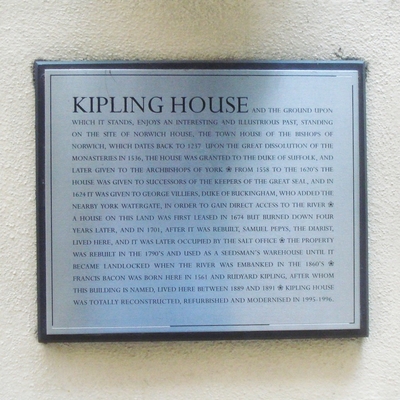
In 1534, for reasons not only to do with his marital situation, Henry VIII broke with Rome, the Pope and the Catholic Church. At the time the Catholic monasteries (and abbeys, priories, convents and friaries) owned over a quarter of all the cultivated land in England. Henry declared himself the Supreme Head of the Church of England and as such he had the authority to do what he wanted with all this church estate. He started with the extremely valuable shrines, closing them and taking possession of their assets. On 17 December 1538 the Pope retaliated by excommunicating Henry. Henry continued his plunder and pillage, breaking up over 850 monasteries in total.
Plaques commemorating monasteries often don't mention how they were destroyed but here is a list of those that we have found so far in London: Holy Trinity Priory, Greyfriars Monastery, Hospital of St Anthony, Bermondsey Abbey, Blackfriars Priory, Charterhouse, Holywell Priory, Austin Friars, Stratford Langthorne Abbey, Chapel of St James in the Wall, Order of St John, Clerkenwell, St Mary's, Willesden, Augustinian Priory of St. Mary, Spitalfields, and Hounslow Priory. Also the Hospital of St Thomas of Acon.
The other, less well-known story is that some survived. To quote Dan Cruickshank at : "Elsewhere, the Lord Mayor and Corporation were successful in their campaigns to save the former monastic establishments that became St. Bartholomew’s Hospital, St. Thomas’s Hospital and Bedlam. The fact that these medieval institutions survived the Reformations to continue their useful functions is one of the more pleasing tales of sixteenth century London."




Comments are provided by Facebook, please ensure you are signed in to see them