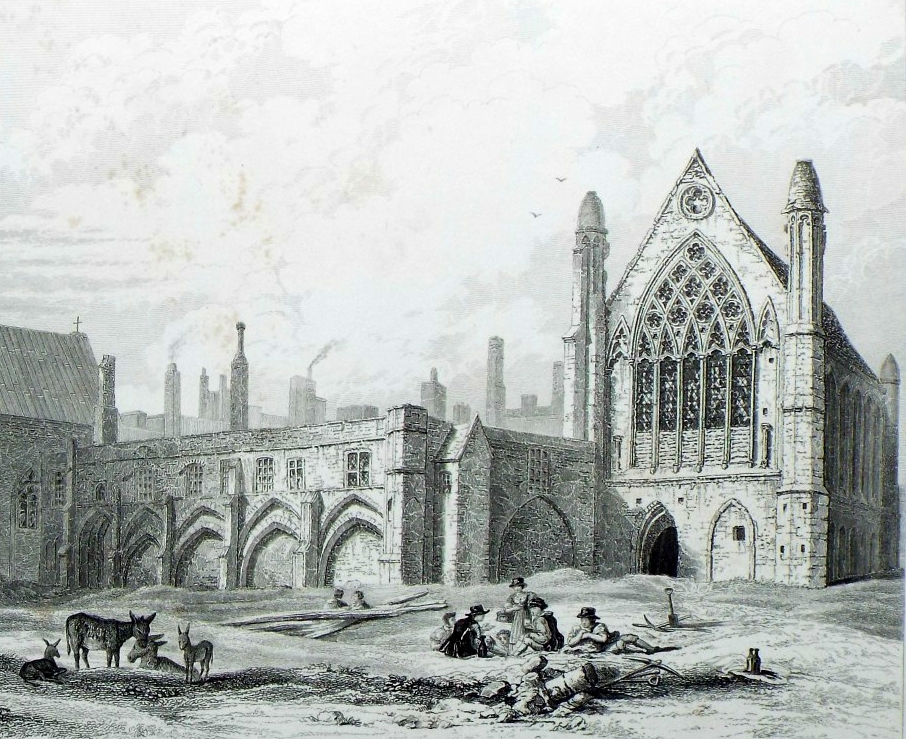
The home of the Bishops of Ely, 1290 - 1772, when it was sold to the crown. The term Palace was used for the London home of a bishop e.g. Lambeth Palace (Archbishop of Canterbury), Fulham Palace (Bishop of London).
A covers the history of Ely Palace/Place and St. Etheldreda​. Some splendid research has resulted in a map showing the boundaries of the palace and grounds, being roughly (using modern names): Holborn, Leather Lane, Hatton Wall, Saffron Hill.
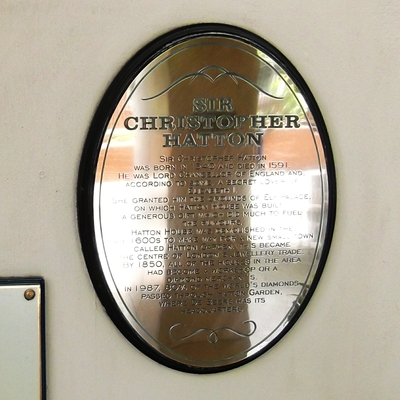
Sir Christopher Hatton acquired possession of the freehold in 1577 and developed some of the grounds, e.g. Hatton Garden, and built a house for himself, Hatton House to the northwest of the palace.
When the last Lord Hatton died in 1772 the Crown took possession of the Ely Place estate. The Bishops were given Ely House, Dover Street W1, and left. The cul-de-sac was constructed and many of the houses now in Ely Place were built at this time.
Ely Palace was an exclave of Cambridgeshire, and therefore didn't come under the jurisdiction of the City of London. In Shakespeare’s 'Richard II', it was here that John of Gaunt made his 'this royal throne of kings, this sceptred isle' speech.
Credit for this entry to: Alan Patient of www.plaquesoflondon.co.uk


Comments are provided by Facebook, please ensure you are signed in to see them