Erection date: 2002
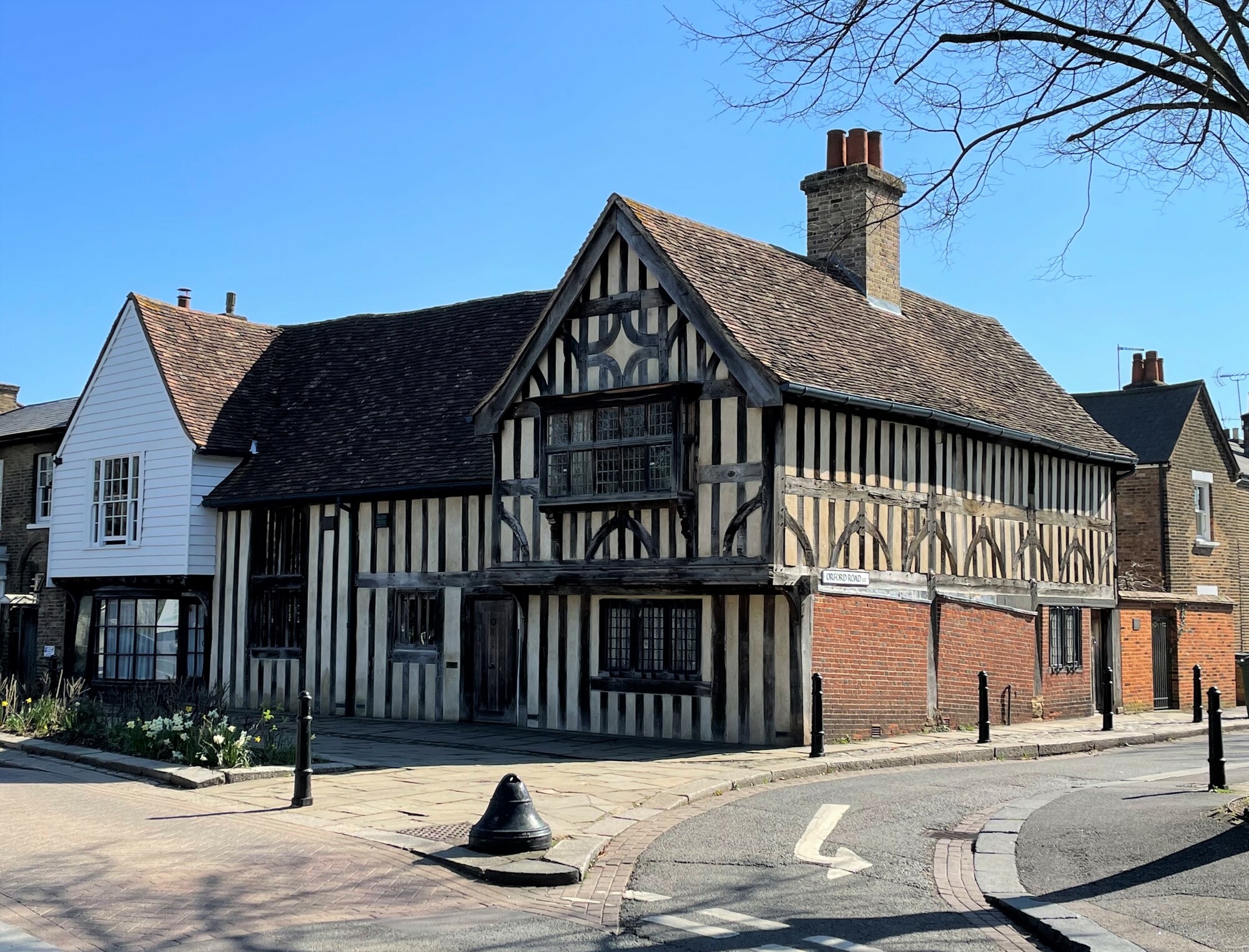
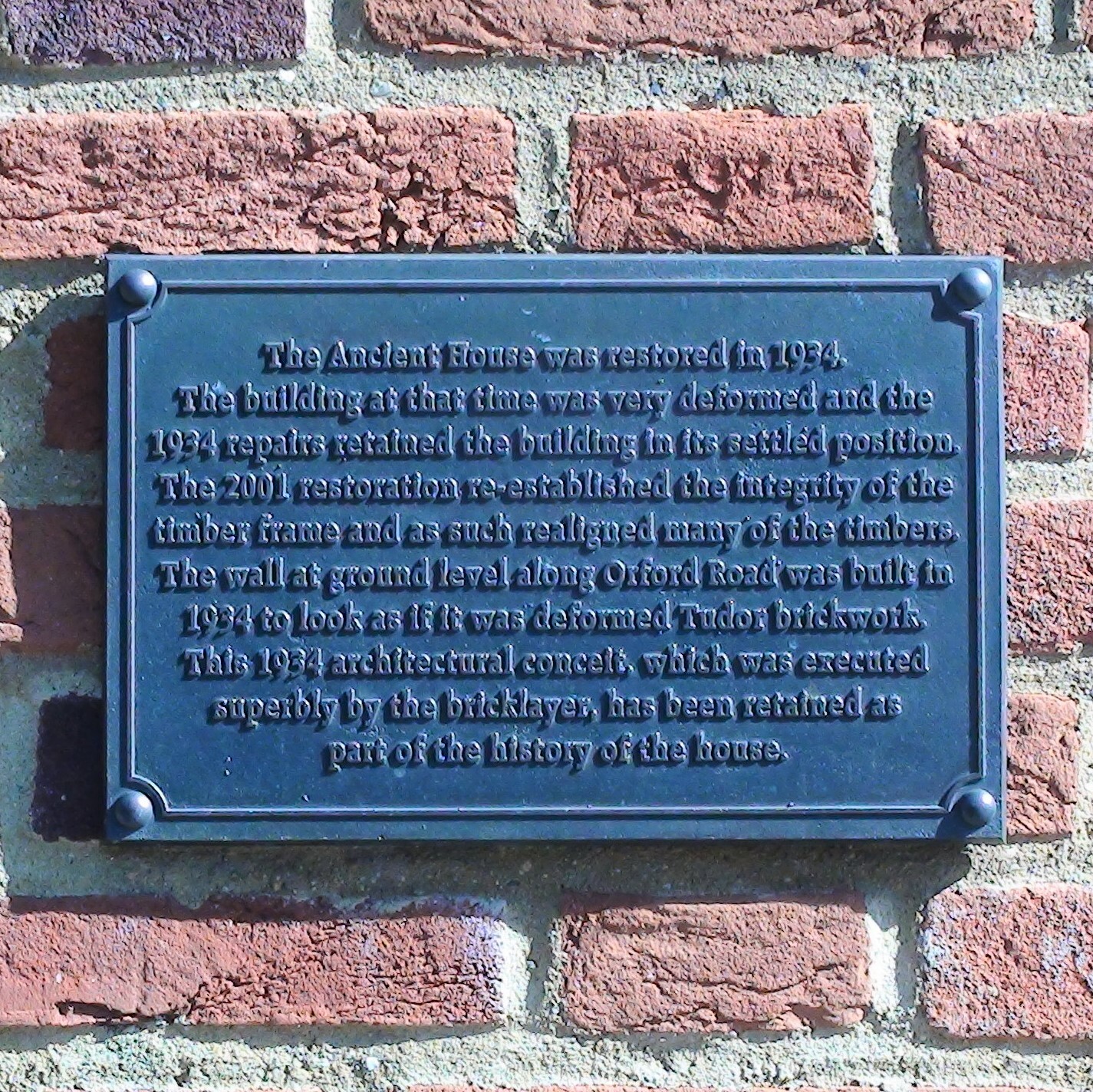
The Ancient House was restored in 1934. The building at that time was very deformed and the 1934 repairs retained the building in its settled position. The 2001 restoration re-established the integrity of the timber frame and as such realigned many of the timbers. The wall at ground level along Orford Road was built in 1934 to look as if it was deformed Tudor brickwork. This 1934 architectural conceit, which was executed superbly by the bricklayer, has been retained as part of the history of the house.
An unusual plaque, in that it focuses entirely on the authenticity, or otherwise, of the restorations.
Site: The Ancient House (2 memorials)
E17, Orford Road
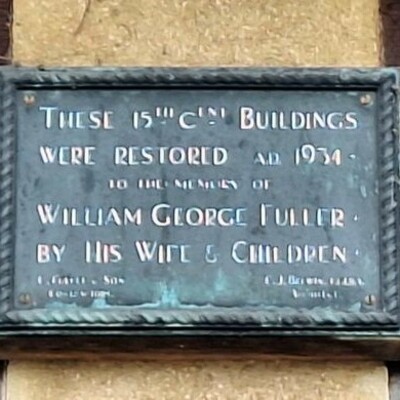
Generally agreed to be one of the oldest houses in London. From : "...1435 seems to be the most agreed-upon year of construction. It was originally a hall house, centred around the titular hall, the largest space in the house where the fire was burnt and the main residents slept on the floor. It is known that the format of the house has changed gradually, but major restorations took place in 1934, and again from 2001-2002. In 1934, some of its exposed brick outer walls were rebuilt. In particular, one was consciously arranged at an angle to give it the impression of Tudor brickwork. The early 21st-century works included the installation of a plaque that brought attention to this fact. The building is currently divided into four dwellings. A renovation during the 1930s was undertaken by the firm Fuller’s, as a memorial to their recently deceased founder, W. G. Fuller. The more recent works were done by Butler & Hegarty."
has "Facing the churchyard, the timber-framed Ancient House (formerly the White House ... dates from the 15th century, with a west wing rebuilt in the 16th."
has: "This 15th century timber-framed building was allowed to deteriorate and at one time it was used as a bicycle shop, but it was restored in 1934. Beside the bow window (which is a late addition) a section of the old wattle and daub construction of the walls is visible behind glass. Similarly the pavement has been cut away and replaced by glass along the frontage to show the original ground level and to show how much it has risen in nearly six centuries."
The (and other property sites) has some photos of the interior.
The plaque referring to both restorations is on the flank wall, on the single storey back extension.
2023: We wrote to asking for information about the lost plaque and about (George) William Fuller but received no reply. It seems that some people Just don't find lost plaques as fascinating as we do.




Comments are provided by Facebook, please ensure you are signed in to see them