Sir Alexander Fleming was a loyal regular. Legend says that it was mould spores from this ale house which blew through Fleming’s window, leading him to the discovery of Penicillin in 1928. The Fountains Abbey derived its name from: "Fountains" - nearby sites of early known springs and wells; "Abbey" - Westminster Abbey possessed the manor of Paddington during Saxon times.

This section lists the memorials where the subject on this page is commemorated:
Fountains Abbey pub
Commemorated ati

Fountains Abbey Public House
Fountains Abbey - Paddington W2 Paddington has always adequately provided ho...
Other Subjects

Catholic Building Society
Started by Vincent Byrne and the Hon. Nona Byrne at 49 Harrington Road. 1966 moved to Great Peter Street, Westminster. 1972 moved to Strutton Ground, occupying a number of buildings at different ti...
1 memorial

Lehmann Gluckstein
Asher Lehmann Meyer Gluckstein was born in Schleswig-Holstein, Germany. HIs family chose the surname Gluckstein (lucky stone) when living under Napoleonic rule in Bremen (now in Germany). As a you...
1 memorial

1 memorial
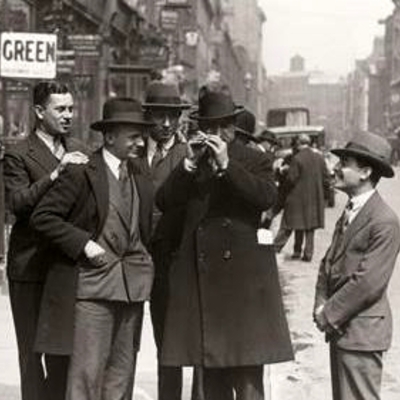
Hatton Garden
The street was developed by and named for Sir Christopher Hatton. It is London's jewellery quarter and the centre of the UK diamond trade. This specialism grew up in the early 19th century spreadi...
1 memorial

Raymond Montague Burton
Led the modern development of Burtons Menswear, and was a generous benefactor of the Jewish Museum in London and the University of York. Identical twin to Arnold - see there for a photo of the 4 B...
2 memorials
Comments are provided by Facebook, please ensure you are signed in to see them