91³Ô¹ÏÍø

Event   

Recycling the nations' railings - WW2

Categories: Architecture, Property

Recycling the nations' railings - WW2

As WW2 wore on, there was an increasing need for metal to make bombs, planes and tanks. To this end, the gates and railings around parks and open spaces were reclaimed as part of the war effort. Likewise railings outside private houses were culled, (although there was a suspicion that upper-class areas were exempted).

Whether the metal was really useful has been debated, and there were rumours at the time that tons of the stuff couldn't be used and were dumped in the Thames Estuary. There's also a suggestion that the factories were over-supplied with iron, but the destruction continued because its effect was to raise the population's awareness of the extreme effort required to fight the war.

The initiator of this metal collecting project was Lord Beaverbrook who was the Minister of Supply 1941-42. As he was also a newspaper publisher he would have been well aware of the propaganda value. 

For more information see the excellent .

Credit for this entry to: Alan Patient of www.plaquesoflondon.co.uk

Comments are provided by Facebook, please ensure you are signed in to see them

This section lists the memorials where the subject on this page is commemorated:
Recycling the nations' railings - WW2

Commemorated ati

Norland Square railings

  This is the second plaque we have found commemorating railings replacem...

91³Ô¹ÏÍø

St Luke's West Norwood - railing replacement

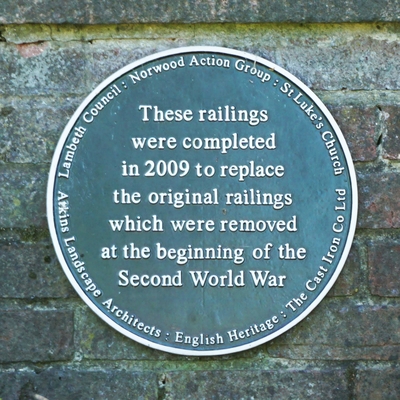
These railings were completed in 2009 to replace the original railings which ...

91³Ô¹ÏÍø

Other Subjects

Gordon and Viner

Gordon and Viner

Architects. We can find no other building by this pair, nor anything about them.

Group, Architecture

1 memorial
George Vulliamy

George Vulliamy

Architect and civil engineer. George John Vulliamy was the son of the clockmaker Benjamin Lewis Vulliamy and nephew to the architect Lewis Vulliamy. Designed the charming and inventive ironwork alo...

Person, Architecture

1 memorial
Henry T. Hare

Henry T. Hare

Architect.  born Scarborough.  Specialised in libraries: Hoxton, Hammersmith, Islington Central, Islington North Branch and at least three outside London.  He carved or etched a hare in all his bui...

Person, Architecture

1 memorial
Chelsea Embankment

Chelsea Embankment

Designed by Sir Joseph Bazalgette. Apart from providing a pleasant riverside walk, it was built with the dual purpose of providing a flood barrier and as a covering for the main low level sewer for...

Place, Architecture

2 memorials
Frank Saunders & Partners

Frank Saunders & Partners

Architects based in SW1, active in 1969.

Group, Architecture

1 memorial