explains "The salt tax, which was unknown in England until 1694, was enforced during the greater part of the eighteenth century. The tax was repealed in 1730, but was reimposed at the suggestion of Sir Robert Walpole in 1732." That page is all about Buckingham Street and refers to The Salt Office being, variously, at numbers 12, 14, 19, over the years 1706-88. This is after York House has been demolished and redeveloped into a number of streets including Buckingham Street.

This section lists the memorials where the subject on this page is commemorated:
Salt Office
Commemorated ati
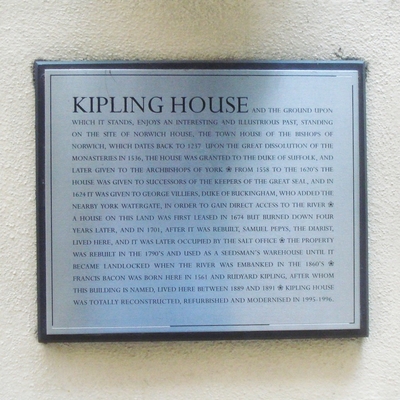
Kipling House
The wording on the plaque could have been clearer. The first half is giving t...
Other Subjects

New River Head windmill
Used c.1709 - 1720 to pump water supplied via the New River from the round pond to the upper pond (now Claremont Square reservoir).
1 memorial

Bag o' Nails Club
Established in the 1930’s.  From their own website: A well-known basement music hangout of the 1930's. Featured in Anthony Powell's novel 'A Dance to the Music of Time". WW2 the club was used as ...
2 memorials

Jones's butcher's shop
Family business that survived until the 1970s. This photograph was taken in 1932.
1 memorial

Frost Fairs
There are records of the Thames freezing over as far back as CE 250. The piers of old London Bridge were broad and close together, meaning that they could get easily blocked creating a dam which wo...
1 memorial

Rules Restaurant
London's oldest restaurant. Opened by Thomas Rule primarily as an oyster bar. It specialises in game and owns the Lartington Estate in the High Pennines. The restaurant stayed in the Rule family un...
1 memorial
Comments are provided by Facebook, please ensure you are signed in to see them