The palace covered the area approximately bounded by (clockwise) Northumberland Avenue, Victoria Embankment, Derby Gate, Downing Street, Horse Guards Road, The Mall. The area was already a centre of government and residence of kings and cardinals when in 1530 Henry VIII ‘acquired’ Cardinal Wolsey’s York Place and modified and extended it to be his White Hall Palace, named for the colour of the stones. Various changes and extensions were made by various monarchs. It suffered badly in a fire in 1691 and again in 1698. Some remained but by about 1750 most of the land had been reused, with only the Banqueting House surviving intact.

This section lists the memorials where the subject on this page is commemorated:
Whitehall Palace
Commemorated ati

Queen Mary's steps
Queen Mary’s Steps, Whitehall Palace In 1691, Sir Christopher Wren designed f...
Other Subjects
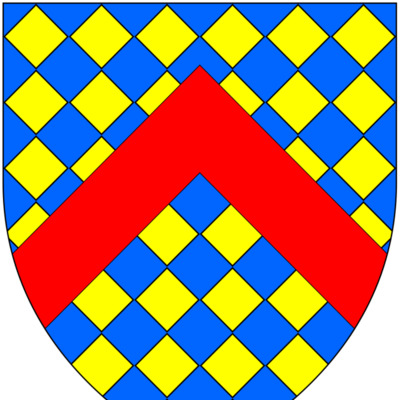
Sir Arthur Gorges
Sir Arthur Gorges was an English sea captain, poet, translator and courtier from Somerset. Cousin to Walter Raleigh and fought in the campaign against the Spanish Armada. Married Elizabeth in 1597,...
Person, Armed Forces, Poetry, Politics & Administration, Property, Transport
1 memorial

1 memorial

1 memorial
1 memorial

Sutton Dwellings
In 1917 The Church Missionary Society sold its college in Upper Street and the building was replaced with Sutton's model dwellings.
1 memorial
Comments are provided by Facebook, please ensure you are signed in to see them