91³Ô¹ÏÍø

Plaque

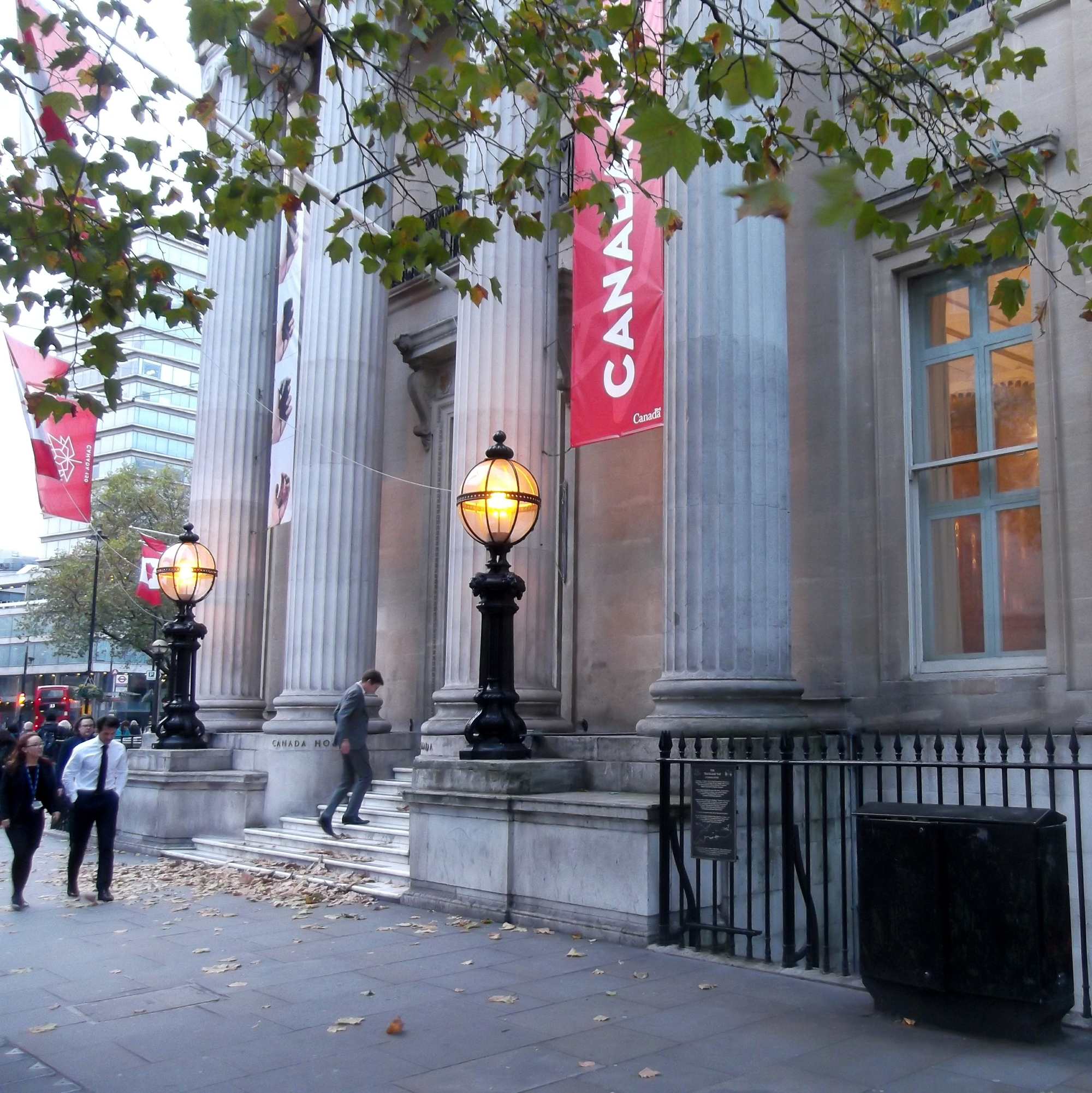
The Trafalgar Way - Canada House

Erection date: 6/12/2012

Inscription

The Trafalgar Way at Canada House

The first official despatches with news of the victory, and the death in action of Vice Admiral Lord Nelson, were carried to England on board H.M. Schooner Pickle by her captain, Lieutenant John Richards Lapenotiere.

Lapenotiere landed at Falmouth on Monday 4th November 1805 and set out by post chaise for London, covering the 271 miles in 37 hours. He drove past this point shortly before one in the morning of Wednesday 6th and turned down Whitehall to reach the Admiralty where he delivered the despatches to the Secretary to the Board with the words "Sir, we have won a great victory, but we have lost Lord Nelson."

The route which Lapenotiere followed from Falmouth to London is now known as the the Trafalgar Way: it is marked by bronze plaques at the 21 stages where he is known to have changed horses, and at a number of intermediate points.

Unveiled by His Excellency Gordon Campbell, OBC, High Commissioner for Canada, on 6 November 2012 to honour the men from territories that became constituted in the Dominion of Canada who fought in the British fleet at Trafalgar.

{At the top, the plaque depicts a sailing ship and a carriage. Lower down is a map showing the route of the Trafalgar Way.}

Site: The Trafalgar Way - Canada House (1 memorial)

WC2, Cockspur Street, Canada House

This area has been known as Little Canada explains why.

Credit for this entry to: Alan Patient of www.plaquesof london.co.uk

Comments are provided by Facebook, please ensure you are signed in to see them

This section lists the subjects commemorated on the memorial on this page:
The Trafalgar Way - Canada House

Subjects commemorated i

Battle of Trafalgar

A sea battle that took place off Cape Trafalgar on the south west coast of Sp...

91³Ô¹ÏÍø

Foreign nationals at the Battle of Trafalgar

The popular image of the navy in Nelson's time, is of ships manned solely by ...

91³Ô¹ÏÍø

Napoleon Bonaparte

Military and political leader. Born at Ajaccio, Corsica. He trained as an off...

91³Ô¹ÏÍø

Lieutenant John Richards Lapenotiere

Born in 1770 in Ilfracombe, Devon, to a Huguenot family. As a Lieutenant in ...

91³Ô¹ÏÍø

Horatio, Lord Nelson

Born in Burnham Thorpe, Norfolk. Naval commander who became a national hero a...

91³Ô¹ÏÍø

Show all 6

This section lists the subjects who helped to create/erect the memorial on this page:
The Trafalgar Way - Canada House

Created by i

Gordon Campbell

Canadian diplomat and politician. Born in Vancouver. He was the 34th Premier ...

91³Ô¹ÏÍø

Nearby Memorials

Chelsea civilians killed in  WW2

Chelsea civilians killed in WW2

SW3, Dovehouse Green

In remembrance of 457 civilians killed in Chelsea by enemy action 1939-1945.

4 subjects commemorated
Linnell & Blake

Linnell & Blake

NW3, North End, Old Wyldes

Greater London Council John Linnell, 1792 - 1882, painter lived here. William Blake, 1757 - 1827, poet and artist, stayed here as his...

2 subjects commemorated, 1 creator
UCL - WW1

UCL - WW1

WC1, Gower Street, University College London

The original UCL, built 1825 - 1832, comprised this quad and its buildings, by the architect William Wilkins (1778 -1839).

2 subjects commemorated, 1 creator
Sir Hiram Maxim and his gun

Sir Hiram Maxim and his gun

EC1, Hatton Garden, Kovacs House

Greater London Council Sir Hiram Maxim, 1840 - 1916, inventor and engineer designed and manufactured The Maxim Gun in a workshop on thes...

2 subjects commemorated, 1 creator
Harry Tate - SM1

Harry Tate - SM1

SM1, Camden Road, 27

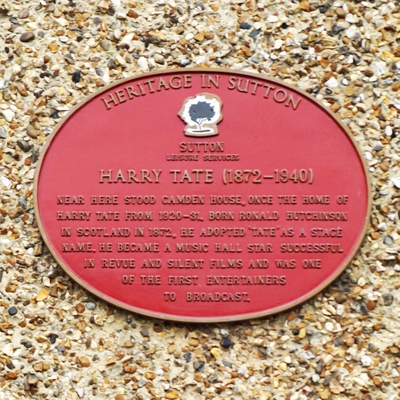
The plaque misspells Hutchison and gives Scotland as the place of birth, which contradicts Kennington, given by Wikipedia and ODNB.

2 subjects commemorated, 1 creator