Erection date: 7/3/2017
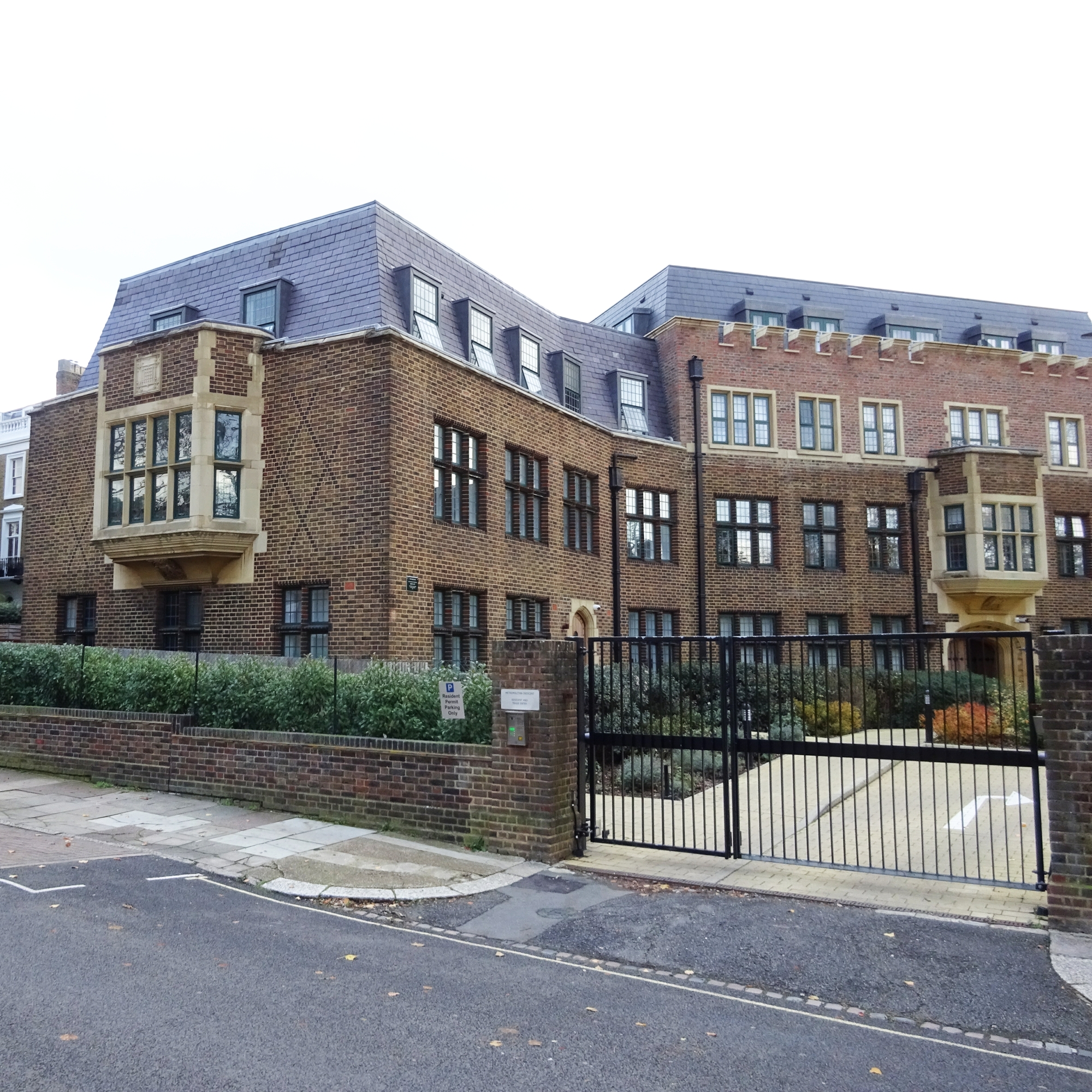
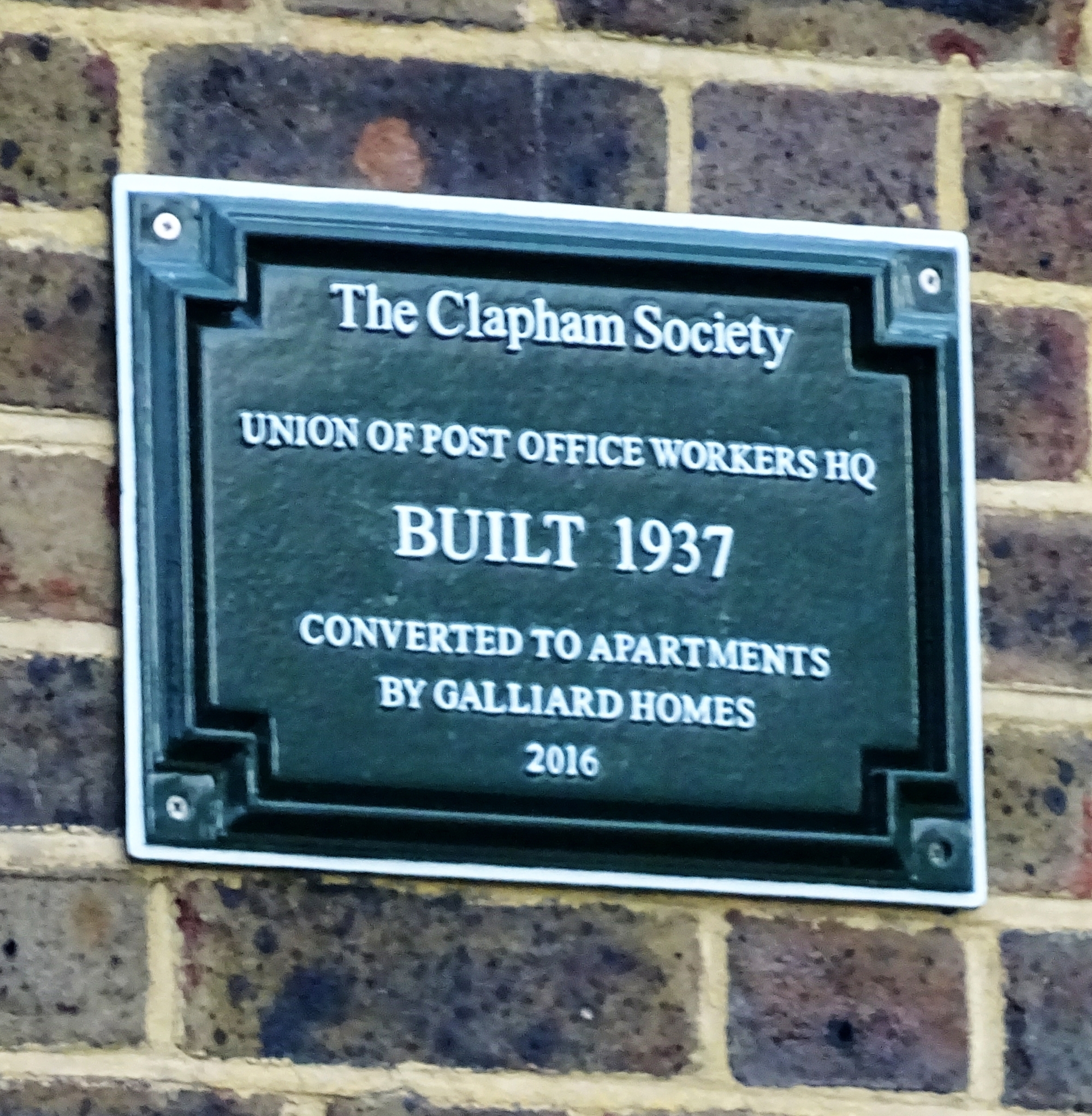
Union of Post Office Workers HQ, built 1937, converted to apartments by Galliard Homes, 2016.
The Clapham Society
Unveiled by Alan Johnson, MP, who had worked in the building for several years when he was General Secretary of the Union of Communication Workers.
Site: Union of Post Workers headquarters (1 memorial)
SW4, Crescent Lane, Metropolitan Crescent
This site was originally occupied by the 1826/7 Grove Lodge and its extensive grounds, shown on this , towards the left, between the H and A of a very large 'Clapham'. c.1920 the house was sold to the Amalgamated Union of Building Trade Workers for use as their headquarters, and renamed ‘The Builders’.
In 1935 Grove Lodge was demolished and its grounds divided. The Builders Union commissioned a new building for themselves, from the architect, , with a frontage on Abbeville Road. Culliford also designed the new headquarters for the Union of Post Office Workers roughly on the footprint of the original Grove Lodge. This building was opened on 16 July 1937.
Extensive use of brick and Tudoresque flourishes - this is not the architectural style we expect from the period. It is a example of the 1930’s Tudor Revival, but resisting black and white timber frame.
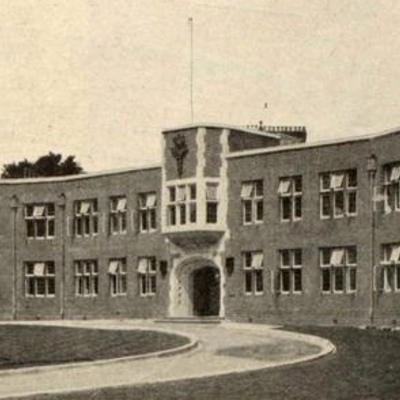
In 1976 an additional storey was added to accommodate the increasing number of staff. Looking at the images presented by the the building originally had two storeys throughout, and no mansard. The 1976 work seems to have been simply to add a mansard floor to the whole building.
In 1998 when the Union, by then renamed the Union of Communication Workers (UCW), merged and relocated, the building was sold to the Metropolitan Housing Trust (MHT) for office use.
In 1982-83 Henry Twining Court sheltered housing was built between the two union buildings, and so named because Henry Twining of the tea family once occupied the original house on the site, Grove Lodge.
In 2012 MHT moved and the building was converted for residential use by Galliard Homes in 2016-17 and renamed Metropolitan Crescent. This is when the extra floor (with crenulations) was added to the central section, below the mansard.
Sources: .
Credit for this entry to: Alan Patient of plaquesoflondon.co.uk




Comments are provided by Facebook, please ensure you are signed in to see them