Initially a hamlet, then an administrative area but without its own associated church, a vestry.
explains: “Mile End is recorded in 1288 as La Mile ende. It is formed from the Middle English 'mile' and 'ende' and means 'the hamlet a mile away'. The mile distance was in relation to Aldgate in the City of London, reached by the London-to-Colchester road. In around 1691 Mile End became known as Mile End Old Town, because a new unconnected settlement to the west and adjacent to Spitalfields had become known as Mile End New Town.”
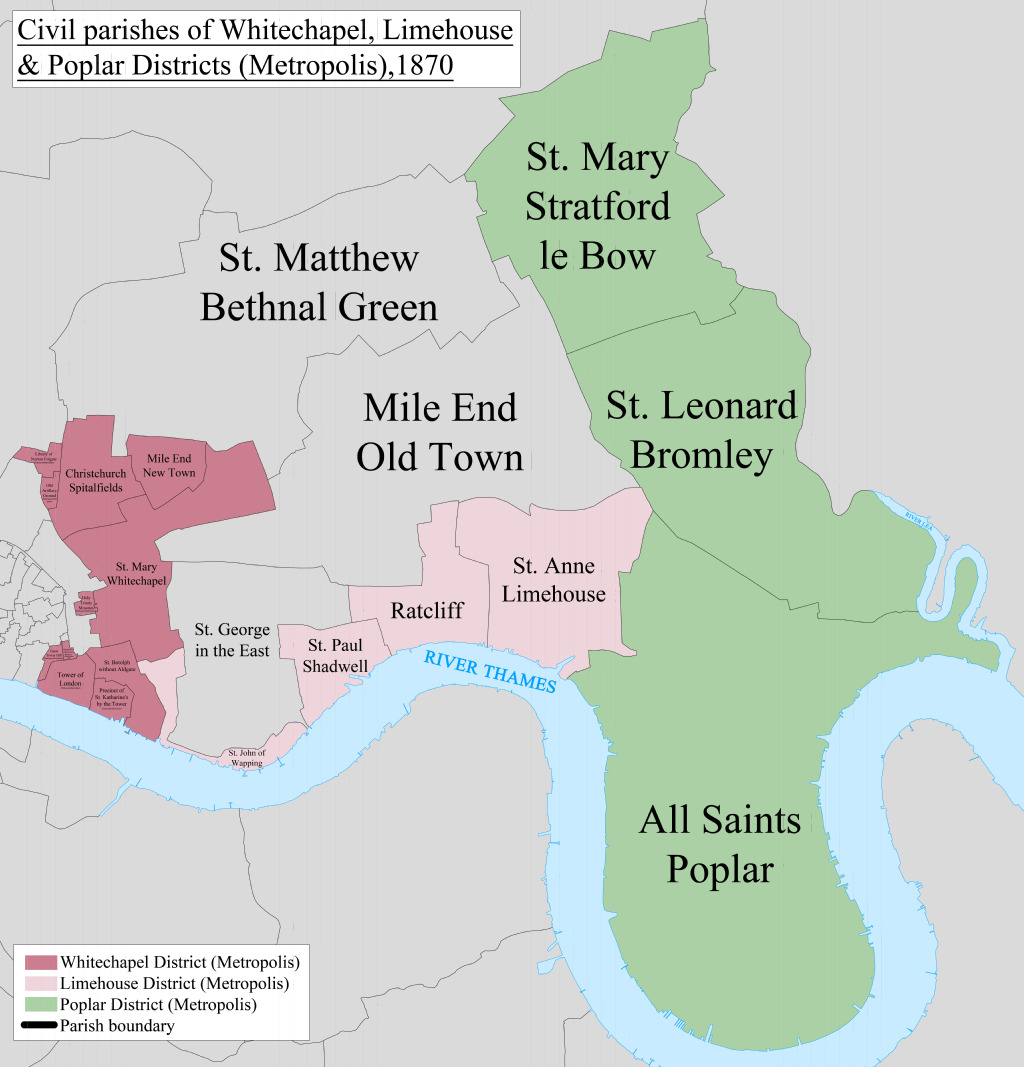
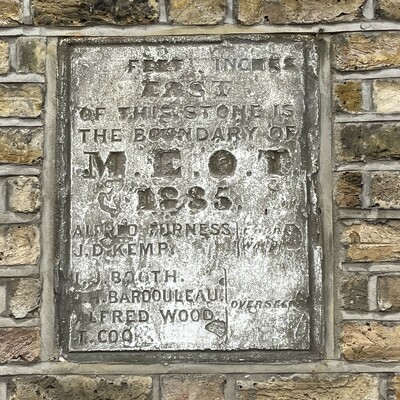
This diagram comes from that page and it helpfully shows both the Old and the New towns, but with no geographical features except the river it's not as useful as it might be. It doesn't look to us as if Mile End Old Town reached as far east as Coborn Street, which it must have done, for the stone marker to make any sense.
The provides a lot of information, with this introduction: "Mile End Old Town was one of the four hamlets - the others being Ratcliff, Poplar and Blackwall until 1820, and Mile End New Town - which formed part of the large ancient mother parish of Stepney, some six square miles in extent. The distinguishing feature of any hamlet was, strictly speaking, the lack of a church in which parishioners could worship."
Upon the creation of the Metropolitan Board of Works in 1855 the vestry of Mile End Old Town became an electing authority. The 1861 Vestry Hall was located on Bancroft Road, in the building now used as the . Mile End became part of the new County of London in 1889.




Comments are provided by Facebook, please ensure you are signed in to see them